A bird doesn't need a visa: it arrives when the cold drives it out of Europe, settles wherever fresh water awaits, then leaves again in spring. Watching these passages in Senegal is a matter of timing before it is a matter of gear. Here, month by month, is where and when to look, between the Senegal River delta, the Somone lagoon and the Palmarin lagoons.
Why Senegal is a stopover for birds
The country lies on the great East Atlantic flyway, a corridor followed every winter by millions of waterbirds. After crossing the Sahara, the Senegal River delta is the first large expanse of fresh water they meet. This is where Djoudj National Park is found, a UNESCO World Heritage Site since 1981, which birdwatching guides describe as a major wintering site, notably for the aquatic warbler.
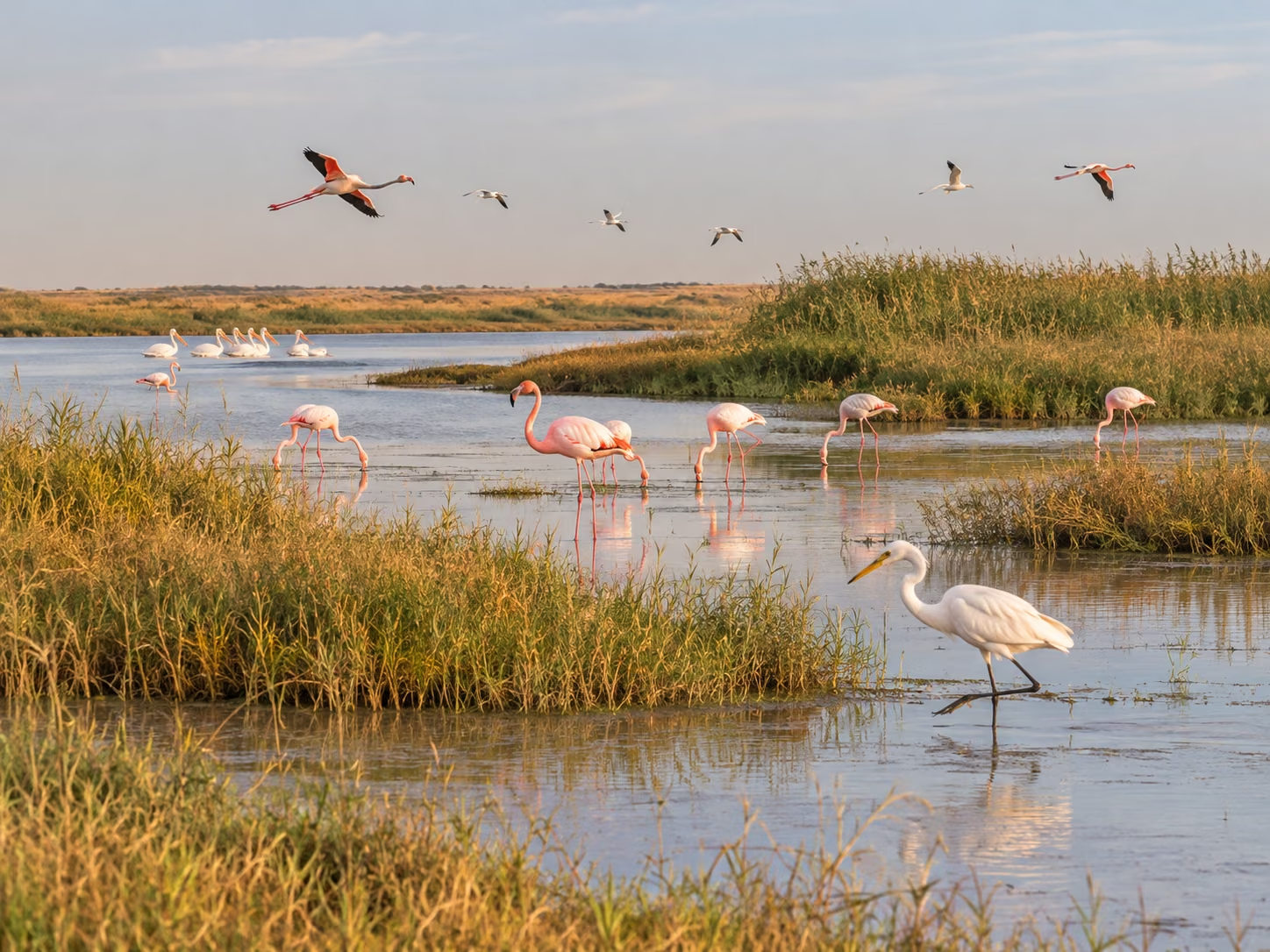
Two bird communities live side by side here. The winter visitors, such as godwits, avocets, ducks and ospreys, come from Europe. The African residents, such as pelicans, flamingos, herons and kingfishers, stay all year round. On a single mudflat you can tick off one species from the Arctic Circle and another that has never left the continent.
The migration calendar, month by month
Keep one simple rule in mind: migrants arrive from November, peak between December and February, then head back north in March and April. The rest of the year, the residents hold the stage. These benchmarks come from guides and observers' records: exact dates shift from one season to the next, with the rains of the wet season and the level of the river.
| Period | Djoudj (north) | Somone and Palmarin (coast) |
|---|---|---|
| November | The park reopens, first migrants arrive in growing numbers | First waders on the mudflats, lagoons still full |
| December to February | Peak of migration: pelicans, flamingos, ducks by the thousand | Spoonbills, herons, egrets, wintering waders, the best window |
| March to April | Still good numbers early on, then departures and heat | Very good outings, some birds begin nesting: set off early |
| May to June | Few migrants, strong heat, tracks getting harder and harder | Mostly residents, a few morning outings still pleasant |
| July to October | Wet season: park closed or almost inaccessible | Breeding season for many residents, rain and humidity |
Djoudj, Somone, Palmarin: three sites, three ways to watch birds
Djoudj: the big spectacle
Shared pirogue along the river channels, a colony of great white pelicans, the Grand Lac. You come for the sheer numbers, about 53 km from Saint-Louis.
Somone: the easy lagoon
Mangrove, sandbanks, calm water. A community reserve since 1999, a Ramsar site since 2017, easy to reach from Saly and Dakar.
Palmarin: the twilight
Lagoons, salt flats and salt marshes in a reserve managed by the villages. In the evening, the light and the hyenas add to the atmosphere.
Djoudj, for the numbers
The outing is by pirogue, often shared, lasting about an hour and a half: you don't drive through the park, you glide just above the reeds to the pelican islets. Recent reports give 5,000 FCFA for entry and 5,000 FCFA for the pirogue per person, with the guide and tips on top. These amounts change, so confirm them before you leave. The Grand Lac observation points are useful, but the birds are sometimes far away, all the more so as you move away from the wintering season: a spotting scope changes everything. For the details of the outing, our Djoudj guide remains the reference.
The Somone, for a first time
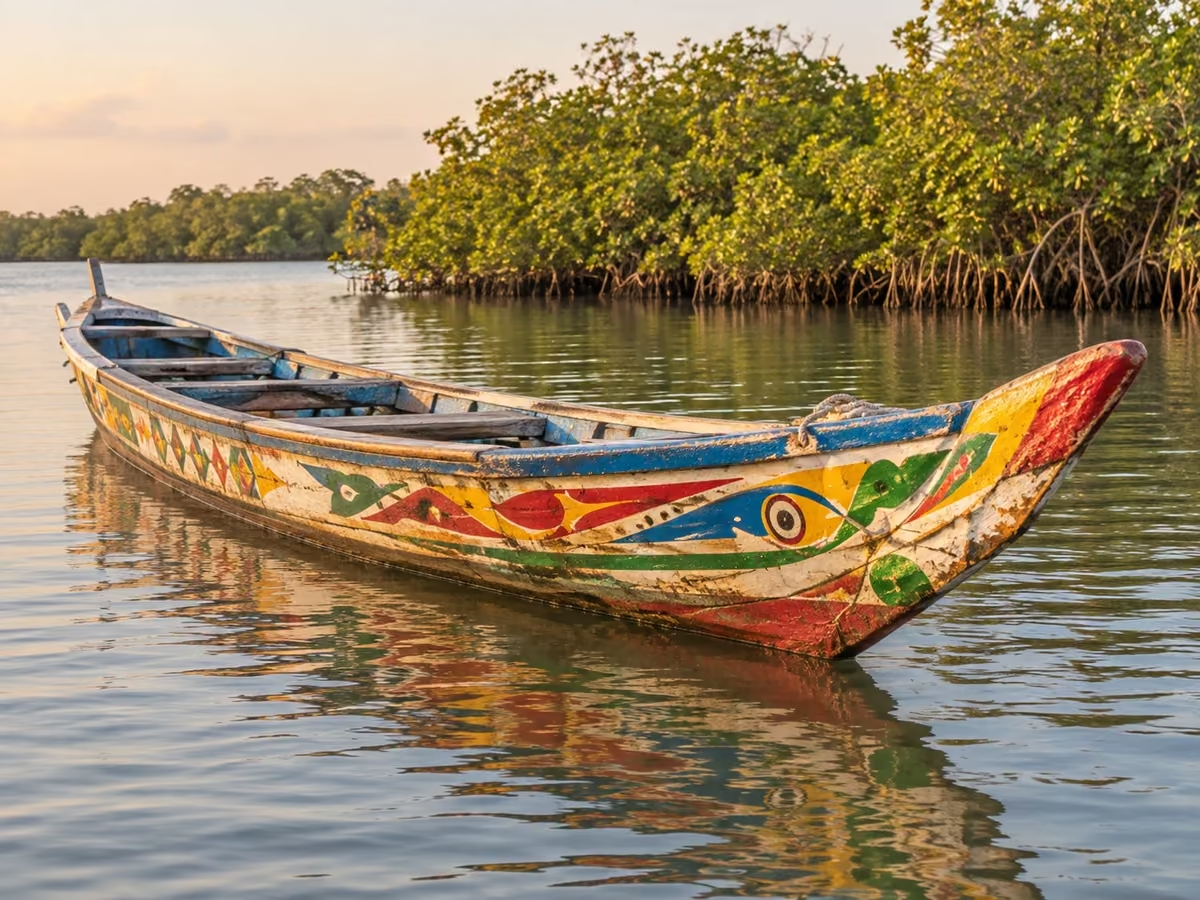
This is the gentlest site for beginners. By pirogue or kayak, you can approach herons, egrets and pelicans without disturbing them, and the tide sets the programme: at low tide, the mudflats are exposed and the waders gather there. We have devoted a complete guide to the Somone lagoon and its bird reserve. Allow about 88 km from Dakar and 1 h 30 on the road, or 13 km and half an hour from the Saly area.
Palmarin, for the evening
Further south, the Palmarin community reserve combines lagoons, mudflats and salt marshes. You can see pelicans, flamingos and herons there, and sunset is the best moment. Allow about 176 km and 2 h 55 from Place de l'Indépendance in Dakar, via the A1, or 113 km and 2 h 20 from the Somone lagoon. For how to organise the day, see our article on Palmarin, its salt marshes and its hyenas.
A birdwatching itinerary by car
The two poles are at opposite ends of the country: the North for the spectacle, the coast for ease. Linking them takes a day on the road, but the whole trip fits into a week without rushing.
- Day 1: Dakar to Saint-LouisAbout 257 km and 4 h 40 on the road. Sleep locally so you can be at Djoudj when it opens.
- Day 2: Djoudj at dawn53 km and 1 h 25 from Saint-Louis. Pirogue, Grand Lac, back in the early afternoon, or a night at the park's camp.
- Day 3: Langue de BarbarieA shorter outing to the sandbanks of the gulls and terns, before heading back south.
- Days 4 to 6: Somone, then PalmarinDrive to the Petite Côte, a pirogue outing at daybreak on the lagoon, then twilight at Palmarin.
For the North, it is better to rent your car directly in Saint-Louis than to drive the outward leg from Dakar: you gain a day and arrive rested for dawn. The outing to the Langue de Barbarie complements Djoudj well, with its sandbanks and seabird colonies. To go beyond birds, Niokolo-Koba is home to more than 300 species, but it is visited on a 4x4 safari, at the other end of the country, and our comparison of reserves reachable in a day helps you choose if time is short.
Gear and etiquette on the water
- ▸8x42 or 10x42 binoculars, at least one pair for every two people. A spotting scope is a real plus for the big stretches of water.
- ▸A hat, water, sunscreen and insect repellent for the evening.
- ▸Clothes in neutral tones: bright colours scare the birds.
- ▸Small notes and coins in FCFA for entry fees, boatmen and tips.
- ▸Speak softly and stay seated, especially near nesting colonies.
- ▸Never ask the boatman to get closer to an islet: distance protects breeding.
- ▸Set off at dawn or late in the afternoon: that is when the birds feed and the light is at its best.
Frequently asked questions
From December to February, when migrants from Europe and the Sahel occupy the wetlands at their peak numbers. The dry season, from November to April, remains a very good window. From July to October, Djoudj is closed or almost inaccessible: you only see resident species, mostly along the coast.
It is possible on paper, but not sensible: Saint-Louis is about 257 km from Dakar, or 4 h 40 on the road, plus 53 km and 1 h 25 to the park. Sleep in Saint-Louis the night before so you are on the water at opening time, when the birds are most active.
A 4x4 is recommended in every season: the last stretch is a bumpy laterite track, especially towards the landing stage and the viewpoints. A saloon car can make it in the dry season, at the cost of slow driving and a risk to the ground clearance. Ask the rental company for its opinion before signing.
Yes, at the Somone lagoon, about 88 km from Dakar and 1 h 30 on the road. A pirogue outing at daybreak is enough to see herons, egrets, pelicans and, in season, waders and spoonbills. It is the simplest site for a first time.
A trip planned around the calendar
Remember three things: December to February for numbers, a night in Saint-Louis for Djoudj, an outing at dawn on the Somone to get started. The rest is patience and a good pair of binoculars.
- ▸Fathala Reserve: the complete guide, to complete the birds with giraffes and rhinos
- ▸Dindefelo Waterfalls and Bassari Country, the secret Senegal of the East
- ▸Noflaye Tortoise Village, a family nature outing near Dakar
Head to Djoudj with the right vehicle
Car with or without a driver, 4x4, local guide: pick up your vehicle in Saint-Louis and be at Djoudj when it opens.
Book my car in Saint-Louis →