Salt pans with pink reflections, spotted hyenas that come out as the sun sinks over the salt flats, and miles of coconut-fringed beach where you meet more fishermen than tourists: Palmarin is unlike any other stop on the Petite Côte. Here is how to plan the visit by car, what to know about the reserve, and at what time of day each place comes into its own.
Palmarin, a strip of land between the ocean and the Saloum
Palmarin stretches along a narrow peninsula south of Joal-Fadiouth: the Atlantic on one side, the Saloum's tidal channels on the other, and between them a mosaic of tannes (salt flats), palmyra palms, mangrove and lagoons. The commune groups several Serer villages, including Ngallou and Diakhanor, and the road ends at Djiffer, a fishing village at the tip. The whole area lies within the Saloum Delta, a UNESCO World Heritage Site since 2011.
If you are new to the region, our guide to the Petite Côte and Sine-Saloum by car places Palmarin among the other stops. Here, you don't come for a monument: you come for landscapes that change from hour to hour, and that clock should set your schedule.
The community reserve and its spotted hyenas
Created in 2001 on the initiative of local residents, the Palmarin Community Nature Reserve covers a little over 10,000 hectares of mangrove, lagoons and scrubby savanna. It is managed together with the villages, and it is the Maison de l'écotourisme that organises visits: a good starting point for booking an eco-guide and understanding what you are about to see.
The hyenas: an encounter, not a show
The reserve is home to a population of spotted hyenas, seen mostly at sunset when they leave their dens. The outing lasts about an hour and a half, with an eco-guide, often by horse cart along sandy tracks. The rest of the wildlife deserves just as much attention: ibises, herons, large numbers of waders on the mudflats, and sometimes jackals or mongooses.
- ▸Always with a reserve eco-guide, never alone on the tracks at dusk.
- ▸No food, no torch shone at the animals, keep your voices low.
- ▸Distance set by the guide: the hyena remains a wild predator.
On budget, reference sites list a 2026 entry fee of 2,000 FCFA per adult, 1,000 FCFA for ages 10 to 16 and free entry under 10, with a ticket valid for 24 hours. The cart is negotiated on top, around 15,000 FCFA according to recent reports. These are ballpark figures: ask for the full price before setting out.
The Ngallou salt pits, to be visited with respect
At the entrance to Palmarin, the salt pits draw an almost lunar landscape: circles of brackish water, white rims, and shades that shift from pink to green depending on the light and the concentration. These basins are dug and worked by hand, overwhelmingly by women, who harvest the salt as the water evaporates.
The best period runs from March to June, in the heart of the dry season, when evaporation is at its peak. Come late in the afternoon for the low light, and keep in mind that you are walking through a workplace: ask before photographing anyone, stay on the dikes and never step on the salt mounds.
A typical day in Palmarin, set by the light
The classic mistake is to arrive in the middle of the day, when the heat flattens the salt flats and the animals hide. It is better to sleep on site and follow this rhythm:
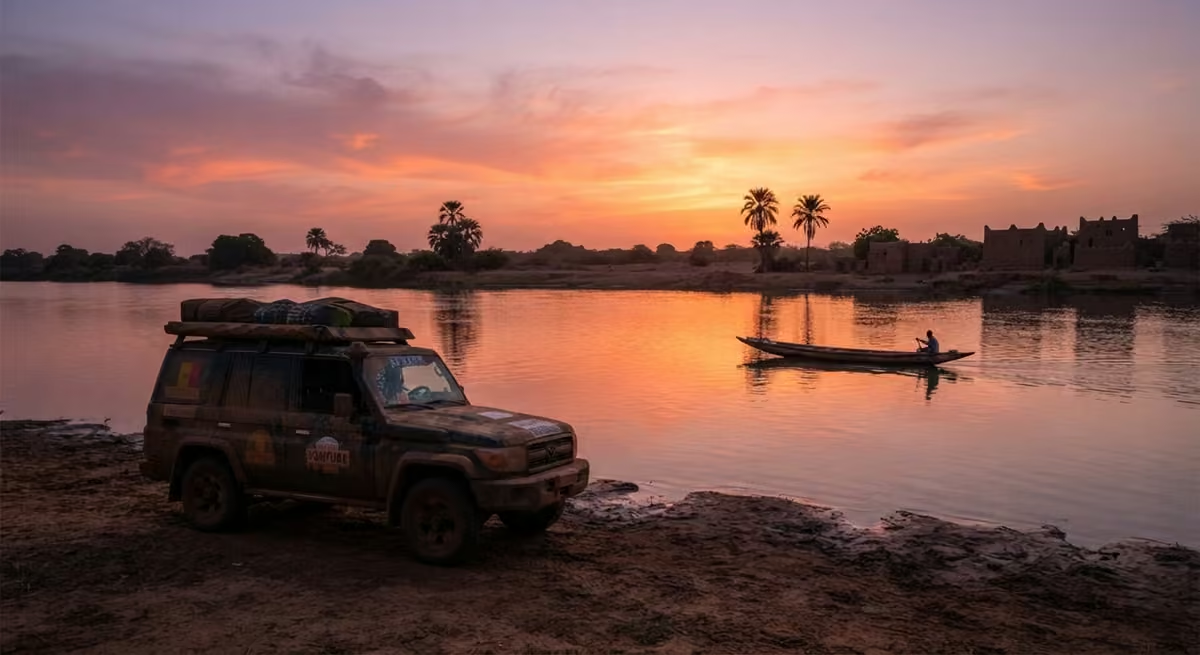
- Sunrise, kayak or pirogue on the bolongsOutings leave from Diakhanor, among other places. Before 9 am the water is calm and the birds are active. To go further into the islands, our pirogue itinerary in the Sine-Saloum delta details the options.
- Late morning, beach and villagePalmarin's beaches are long and quiet. There is no lifeguard: swim with caution, currents vary, and never alone when the sea rolls in.
- Early afternoon, a break in the shadeThe heat rises quickly on the peninsula. This is the time for a grilled-fish lunch and a nap at the camp.
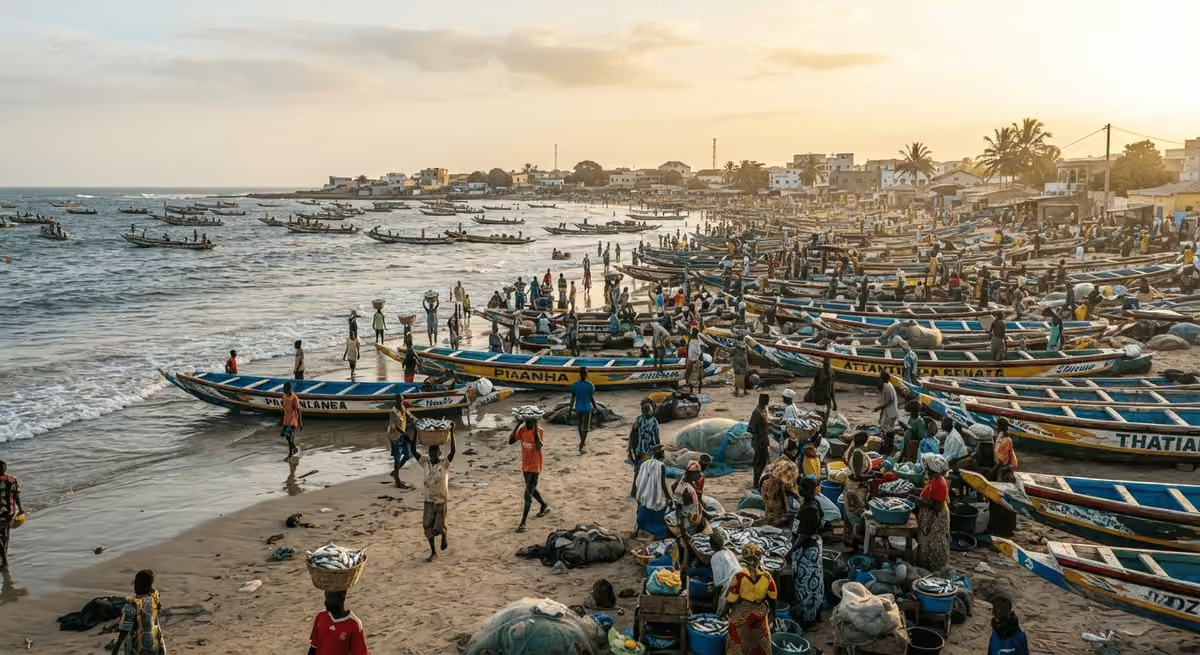
- Around 4 pm, Djiffer and the return of the piroguesAbout fifteen minutes away by road, pirogues come in by the dozen between 4 pm and 6 pm. A local guide helps you find a spot without getting in the way of the unloading.
- Sunset, salt then reserveSalt pits in the low light, then the hyena outing with the eco-guide. Back at camp after dark, without taking to the road again.
Getting there by car and choosing your base
Starting from the capital, where you can pick up your rental car in Dakar, allow about 145 km and three to three and a half hours depending on traffic: motorway to Mbour, then the Joal road, and finally the peninsula. Stop at Joal-Fadiouth and its shell island, then at the Fadial baobab on the way, one of the oldest in the country. If you come via the Somone lagoon, add an hour.
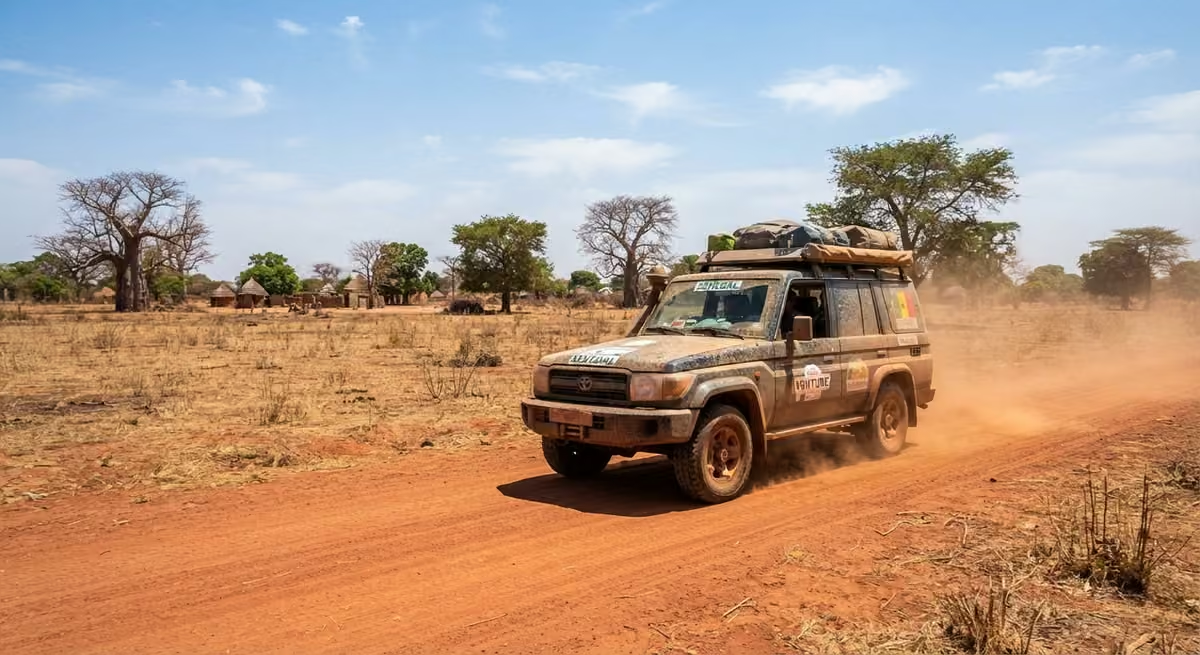
The main road can be driven in a saloon car, but access to some camps and to the reserve outings crosses sand: an SUV or a 4x4 rented on the Petite Côte gives you more margin, especially in the rainy season (see our guide to laterite and sand tracks in the rainy season). Don't plan the return at night: our advice on driving at night in Senegal explains why.
| Option | Advantage in Palmarin | To plan for |
|---|---|---|
| Self-drive | Total freedom to follow the light | Scouting the sandy access roads by day |
| With driver | No worries about tracks or the return | Accommodation for the driver if you stay overnight |
| Driver from Mbour | Closest departure, shorter day | Book the day before in high season |
To avoid the road from the capital, a driver departing from Mbour shortens the day considerably. As for accommodation, Palmarin offers mostly eco-lodges and camps, simpler than the hotels of Saly. If you are weighing a base further south in the delta, compare with Toubacouta, Ndangane and Foundiougne.
Frequently asked questions
No, and no serious guide will promise it: these are wild animals that come out mostly at dusk. Your chances improve with a late-afternoon outing, accompanied by a reserve eco-guide, staying quiet and keeping your distance. An evening without hyenas is still a lovely walk across the salt flats at sunset.
The fees listed by reference sites are 2,000 FCFA per adult, 1,000 FCFA for ages 10 to 16 and free under 10, with a ticket valid for 24 hours. The cart and the eco-guide are paid separately. These amounts may change: confirm them at the Maison de l'écotourisme before your outing.
In the dry season, and more particularly from March to June, when evaporation is strongest and the salt circles take on their colours. In the rainy season, part of the basins is flooded by rain. In every case, you don't walk on the mounds: they are the fruit of the salt workers' labour.
It is enough for the salt pits and an end-of-day outing, provided you leave early and sleep on site, since returning to Saly at night is not recommended. To add Djiffer, kayaking on the bolongs and a proper morning at the beach, plan two nights.
What to remember
Palmarin rewards those who slow down: one night at the very least, the morning for the water, the evening for the salt and the hyenas, and the day for the beach. With a vehicle suited to sand and an early start, the peninsula becomes one of the most memorable stops on a trip through the Sine-Saloum.
Head for the peninsula stress-free
Saloon car, SUV or a driver who knows the access roads: choose the option that fits your programme in the Sine-Saloum.
Rent my car in Dakar →