Forty minutes' drive south of Saint-Louis island is enough to go from colonial façades to a lagoon where pelicans fish in formation and terns nest on sandbanks. Langue de Barbarie National Park is visited by pirogue from Gandiol, in a well-planned half day. Here is how to organise the trip, what you will see depending on the season and at what price, with the right habits for getting there by car.
The Langue de Barbarie: a national park between river and ocean
The Langue de Barbarie is a thin spit of sand running south from Saint-Louis, separating the Atlantic from the Senegal River estuary. On the west side, ocean swell; on the east, a calm lagoon lined with mangroves, casuarinas and small fishing villages. The national park protects its southern tip and the river mouth, over roughly 2,000 hectares of water, dunes and islets.
This landscape has changed profoundly since October 2003. To relieve Saint-Louis from an expected flood, the authorities opened a relief channel only a few metres wide through the spit, about 7 km south of the city. The ocean rushed in: over the years the breach widened until it became the river's new mouth, and the village of Doun Baba Dièye, located opposite, was swallowed up. By pirogue, your boatman will often show you what remains of the old tip of the spit, and the story of the breach is an integral part of the visit.
What to see at Langue de Barbarie National Park
The park is nothing like Djoudj, its neighbour to the north. Where Djoudj is a maze of freshwater marshes that migratory birds flood into in winter, the Langue de Barbarie is a salty estuary environment open to the ocean. The two visits complement each other more than they overlap: if you are hesitating, our guide to Djoudj National Bird Sanctuary and its pelicans details the other side of the delta's birdlife.
The estuary's birds
White and pink-backed pelicans, cormorants, egrets, herons and spoonbills share the lagoon's banks. On the offshore sandbanks, it is mostly the gulls and terns that dominate: grey-headed gulls, slender-billed gulls and several species of terns, including the royal tern and the Caspian tern. These colonies breed on sandy islets in spring; the boatman approaches slowly and keeps his distance so as not to cause a mass take-off.
Sea turtles and the ocean beach
Three species of sea turtle visit the spit, including the green turtle and the leatherback. Nesting takes place from October to February, at night, and is rarely observable: some lodges organise guided outings, with no guarantee of results. By day, the real reward is walking across the spit, from the calm banks of the lagoon to the great Atlantic beach, often deserted. Swimming there is not recommended: strong currents and powerful breakers.
Gandiol, its salt pans and its lighthouse
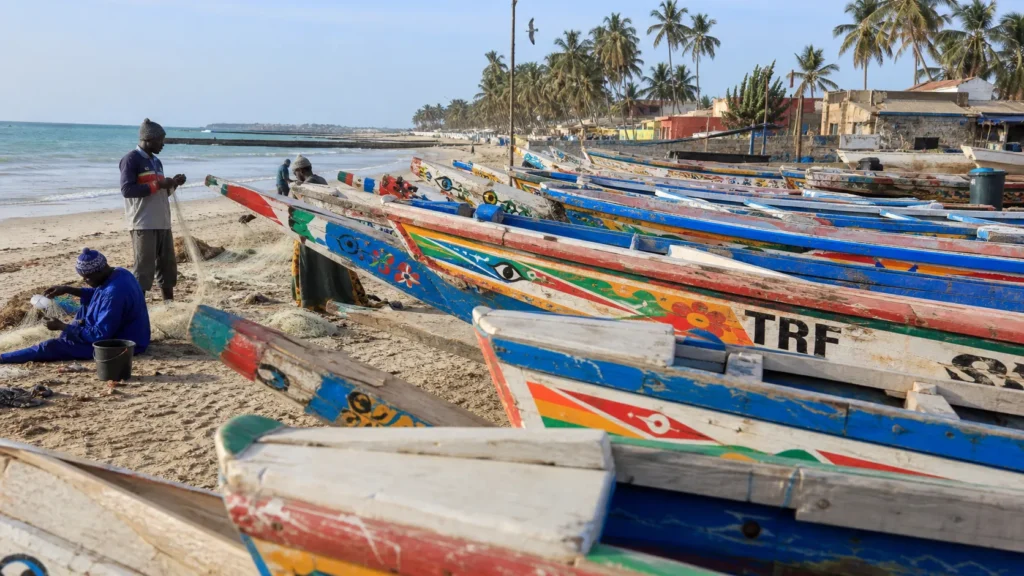
Take the time to stop in the Gandiol area before or after the pirogue. Women run small artisanal salt pans there, in square basins along the road, and the Gandiol lighthouse watches over the estuary from the mainland bank. This is rural Senegal, far from the bustle of Saint-Louis, where you buy salt directly from the producers.
Excursion from Saint-Louis: three ways to organise the outing
It all depends on how much time you have in the region and your taste for walking or wildlife watching. The three options below cover the vast majority of stays.
The express half day
Leave Saint-Louis around 8am, 1h30 pirogue trip from Gandiol, walk across the spit to the ocean, back for lunch on the island. Ideal if you follow up with a visit to the city in the afternoon.
The day with Guembeul
Morning at the Guembeul special fauna reserve (African spurred tortoises, patas monkeys, dama gazelles) about twelve kilometres from Saint-Louis, then a pirogue trip in the early afternoon and sunset on the lagoon.
A night on the lagoon
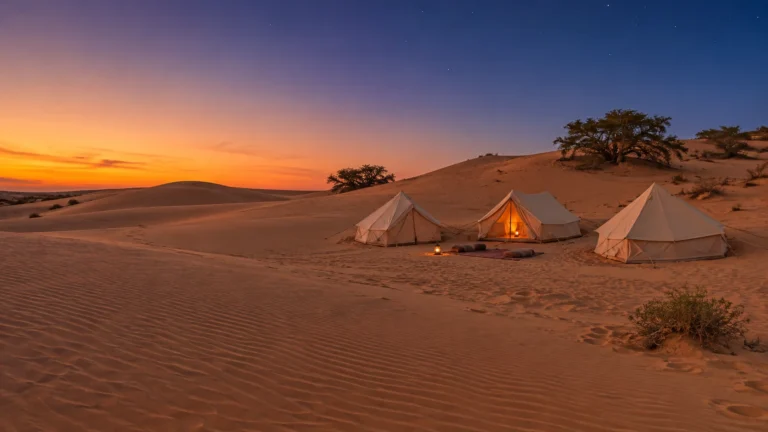
The camps and lodges at Mouit and around the lagoon often include park entry and offer the pirogue at a preferential rate. The best way to enjoy the morning light and the evening silence.
We prefer the morning outing: soft light, less wind on the lagoon, more active birds. In the afternoon, the harmattan or the sea breeze can stir up the lagoon and make the crossing less comfortable, especially for photography.
Getting to Gandiol by car from Saint-Louis
Access is simple: you leave Saint-Louis to the south towards Gandiol, on a paved road that runs alongside the salt pans and market gardens. Allow about 25 km and 40 minutes to the landing stage, a little more if you stop at Guembeul on the way. No 4x4 is needed for this trip; a small city car is enough, driving carefully through the villages where carts and children share the road.
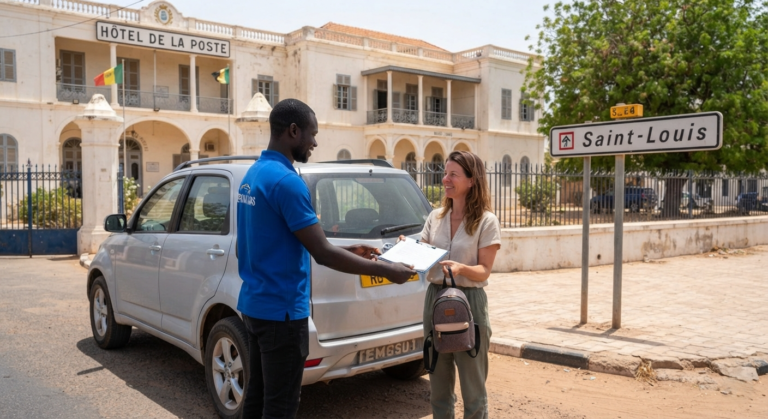
Saint-Louis remains the logical base for the excursion: it is where you will sleep, where you will find restaurants and fuel, and where it is easiest to rent a car in Saint-Louis to move freely between Gandiol, Guembeul and Djoudj. From Dakar, the city is about 257 km away, i.e. nearly 4h45 by road via the R70, more depending on traffic leaving the capital: set off early, and avoid driving back the same evening, as night driving in Senegal on the N2 holds some nasty surprises.
| Option | Who it suits | Points to note |
|---|---|---|
| Self-drive car in Saint-Louis | Independent travellers who want to combine the park, Guembeul and Djoudj at their own pace | Easy road to Gandiol; negotiate the pirogue on site or have your accommodation book it |
| Car with driver in Saint-Louis | Families, travellers arriving from Dakar the same day | The driver knows the landing stages and the reliable boatmen; you enjoy the scenery without stress |
| Car with local guide | Bird lovers and fans of local history | Species identification, the story of the 2003 breach, a stop at the Gandiol salt pans |
If you arrive from Dakar without planning to return, the one-way rental Dakar Saint-Louis avoids an empty return trip and leaves the way open to continue towards the river or Mauritania.
Prices and opening hours of Langue de Barbarie Park
The rates below come from travel guides published in 2025 and on-site checks. They change regularly: take them as a rough guide and have your accommodation or the boatman confirm them before leaving.
- ▸Park entry: about 5,000 FCFA per person, often included if you sleep in a lagoon lodge.
- ▸1h30 pirogue trip: 5,000 to 10,000 FCFA per person depending on the number of passengers, cheaper in a group.
- ▸Organised excursion from Saint-Louis (transport, pirogue, entry): around 25,000 FCFA per person for a 4-hour half day.
- ▸Opening hours: the park is advertised as open from 8am to 6pm, the Guembeul reserve until 6:30pm.
- ▸Insist on life jackets on board: the breach channel is reputed to be dangerous and has already cost the lives of fishermen. Tourist outings stay on the lagoon side.
- ▸Bring water, a hat and sunscreen: there is no shade on the spit.
- ▸Pay the entry fee at the park post against a ticket; beware of intermediaries offering a "package" without itemising it.
The park can be visited all year round, but the dry season, from November to April, offers the best conditions: clear skies, calmer sea and a strong presence of migratory birds. During the rainy season, from July to October, the humid heat and storms make the outing less pleasant, without preventing it.
Combining the Langue de Barbarie with the rest of the North
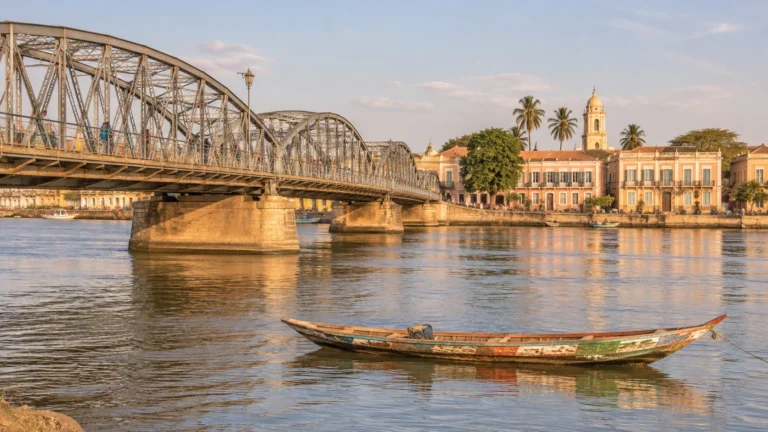
Two to three nights in Saint-Louis let you cover the essentials: a day for the island and the Faidherbe Bridge, a half day at the Langue de Barbarie, a morning at Djoudj. If your trip continues south, our Senegal road trip itineraries from 3 to 15 days shows how to connect the North to the Petite Côte and the Sine-Saloum, where the Fathala reserve offers a completely different register, that of savannah and large mammals.
Frequently asked questions
Half a day is enough from Saint-Louis: 40 minutes' drive, 1h30 by pirogue and some time walking on the spit. Allow a full day if you add the Guembeul reserve, or a night on site to enjoy the sunrise over the lagoon.
It is technically possible but not recommended: Saint-Louis is nearly 4h45 from Dakar, which means more than nine hours on the road for 1h30 of pirogue and a night-time return. It is better to sleep at least one night in Saint-Louis or in a lagoon lodge.
According to 2025 surveys, entry costs about 5,000 FCFA per person, and the 1h30 pirogue trip between 5,000 and 10,000 FCFA depending on the number of passengers. These rates change: have them confirmed before departure.
No, the Gandiol road is paved up to the landing stage and is easily driven in a small city car. A 4x4 only becomes useful if you plan to use tracks further into the region, towards Djoudj for example.
The spit's Atlantic beach is magnificent but swimming there is dangerous, with strong currents and big breakers. On the lagoon side, the water is calmer; ask your boatman for advice before any swim.
Our advice for a successful Langue de Barbarie excursion
Set off early, have your accommodation book the pirogue and keep time to walk to the ocean: that is where you truly understand this fragile spit, shaped by the river and the swell. With a car in Saint-Louis, Gandiol, Guembeul and Djoudj are linked within a few dozen minutes, without depending on a group's schedule.
Explore Northern Senegal at your own pace
Pick up your vehicle in Saint-Louis and reach Gandiol in 40 minutes, with or without a driver.
Book my car in Saint-Louis →