Here there are no fences and no marked circuits: Niokolo-Koba is Senegal's largest national park and the only one where you genuinely have to look for the animals, following the laterite tracks and the Gambia River. It takes preparation. An approved guide is compulsory, a 4x4 is essential and the camps are rustic: here is how to organise a realistic safari, with budgets in FCFA and the pitfalls of the road from Tambacounda or Kédougou.
Niokolo-Koba: a safari in eastern Senegal, not a fenced reserve
A UNESCO World Heritage site, the park stretches along the Guinean border, at the far end of the country. People come for the buffalo, hippos, crocodiles, antelopes and more than 300 bird species. Lions, elephants and chimpanzees live here too, but they stay elusive: the population figures published in guidebooks date from 2005 and are best read as old orders of magnitude rather than a promise of sightings.
This difference matters for travellers. In a fenced reserve such as the Fathala reserve, seeing animals is almost guaranteed. At Niokolo-Koba, patience and the season account for most of the result. The safari is done by vehicle, and walking is limited to short trails, generally under a kilometre, leading to observation points.
Getting there: from Dakar to Dar Salam by car
The park is far from everything. Dakar is about 500 km from Tambacounda, which means a little over 7 hours on the road depending on traffic and the slowdowns in the towns you cross, then 80 km to Dar Salam, the main entrance. From Kédougou, allow about 150 km to the north. The trip cannot be done in a single day: the right base is Tambacounda, or Kédougou if you are continuing towards Bassari country.
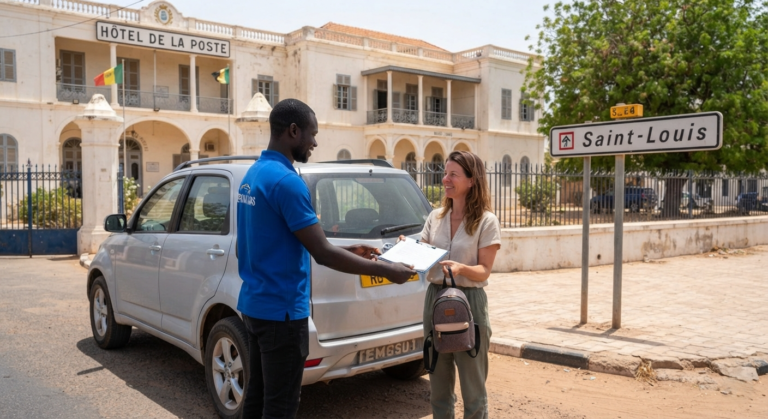
Public transport exists (minibuses and seven-seater taxis between Tambacounda and Kédougou, with a stop at Dialacoto), but there is no regular service to Dar Salam, and none at all for getting around inside the park. That is why most travellers rent a vehicle in town. For the logistics, car rental in Tambacounda spares you from depending on a chance connection.
| Option | Advantage | Limit |
|---|---|---|
| Self-drive car | Total freedom as far as Dar Salam, lowest budget | The park's tracks require a 4x4 and the rental company's approval: check before signing |
| Car with driver | The driver knows the road and the tracks, so you can keep your eyes on the bush | The daily rate is added to the park guide's fee |
| Local guide as well | An extra pair of eyes to spot animals and explain tracks | The park guide remains compulsory inside: do not pay twice for the same job |
If you are looking for a companion who speaks your language, the pages with a local guide in Tambacounda and SUV and 4x4 in Tambacounda detail what is possible.
The 4x4 safari: tracks, rules and park hours
Why a 4x4 is essential
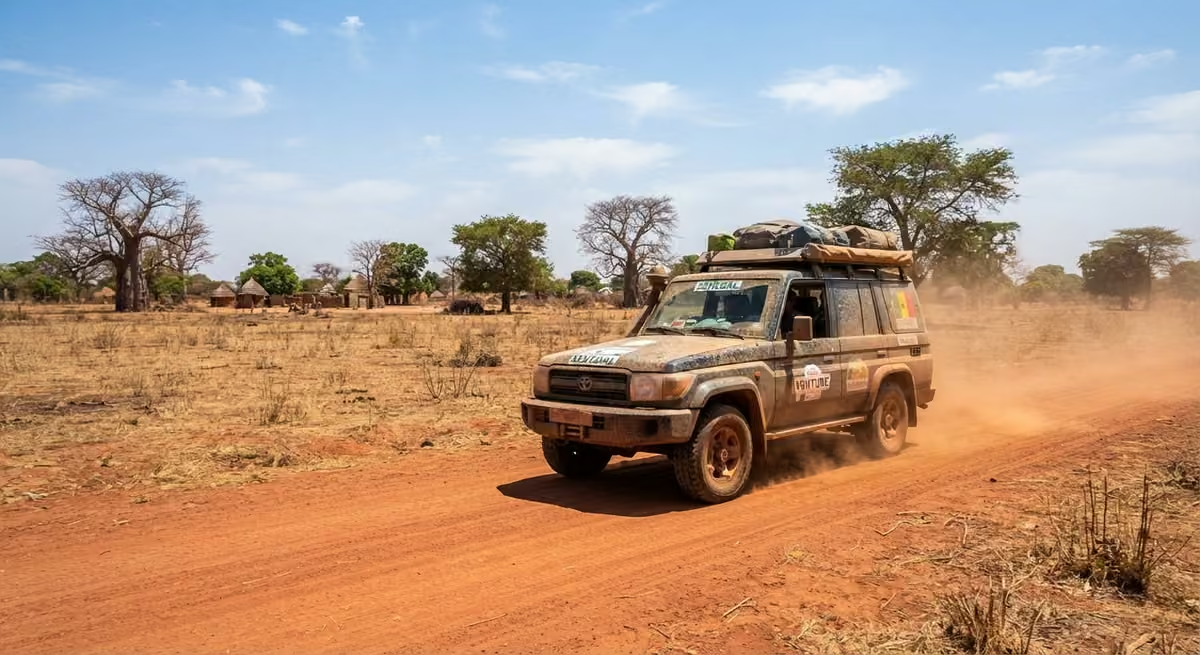
The park's tracks are laterite, with sandy stretches and fords, and the rainy season makes them impassable. That is why the roads only open in late November or early December. A taxi or a small city car will not get far. To understand what changes between a dry track and a waterlogged one, our guide to Senegal's tracks in a 4x4 remains the reference.
The rules to know
- ▸Rangers forbid driving in the park at dusk and at night: set off early, as the gate closes around 4:30 pm according to travellers.
- ▸The approved guide gets into your vehicle; they do not simply wait for you at the entrance.
- ▸Bring all your water: guides advise against drinking river water because of mercury contamination.
- ▸Fill up in Tambacounda or Kédougou: see fuel, stations and range.
The return journey matters as much as the outward one: if you leave the park late, the only safe option is to sleep at Dar Salam or Dialacoto. On this point, driving at night in Senegal explains why it is best not to take the risk.
What to see: Simenti, Wourouli, Mount Assirik
The Simenti waterhole is the classic objective: buffalo, hippos and birds come to drink there, especially in the dry season. Opinions are mixed, some travellers find it disappointing on certain days, and the Wourouli ford is often mentioned as a quieter alternative for buffalo and warthogs. The Mount Assirik plateau, known for chimpanzees and elephants, is only accessible from March to June. A boat trip on the Gambia from Simenti costs about 5,000 FCFA per person for 1h30.
When to go: the viewing window
| Period | What you will find |
|---|---|
| Late November to January | Tracks open, vegetation still tall: wildlife is harder to spot |
| February to June | Best window: water becomes scarce, animals gather at the waterholes |
| June to November | Rains, tracks damaged or closed: to be avoided for a safari |
February to April is the safest range, with hot days: plan for a hat, water and a dawn start. Price and opening-time reports mostly cite 2023 to 2025 sources: confirm with the guides' collective or the park management before locking in your dates.
Where to sleep: camps and hotel in or near the park
- ▸Simenti Hotel: inside the park, on the bank of the Gambia River, with a restaurant and air conditioning. Ask for the nightly rate when you book.
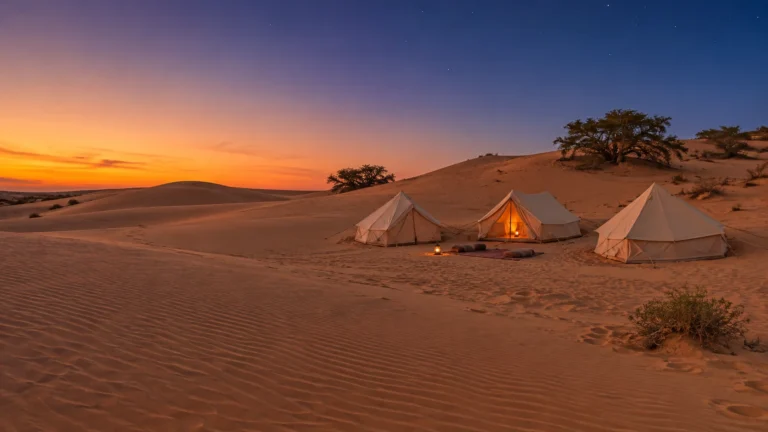
- ▸Lion and Gué Damantan camps: rustic, run by the guides' cooperative. Reports mention about 5,000 FCFA for a tent (bring your own equipment) and 8,000 FCFA for a double hut.
- ▸Dar Salam and Dialacoto: camps at the entrance, around 7,000 to 8,000 FCFA a night for two. Handy if you arrive late.
To extend your stay towards Bassari country and the waterfalls, Kédougou serves as a fallback base, with its own rental companies.
Niokolo-Koba within a wider itinerary
This safari combines well with the country's other parks. You will do well to place it at the start or end of a road trip, because it requires two days of round-trip driving from Dakar: see our selection of ready-made itineraries from 3 to 15 days. As for birds, do not confuse it with Djoudj, which is visited by boat in the north, nor with the Langue de Barbarie, shorter and accessible from Saint-Louis.
Frequently asked questions
Yes, the usual rule is to take an approved park guide, who rides in your vehicle for the whole visit. You pick one up at the Dar Salam entrance or book in advance. Recent reports mention about 10,000 FCFA per day per group, to be confirmed at the gate.
Allow 5,000 FCFA entrance per person, about 10,000 FCFA for the guide, and a 4x4 with driver at 50,000 to 90,000 FCFA a day depending on the source. For a group of four, the day therefore comes to around 20,000 to 30,000 FCFA per person, excluding accommodation. These rates are indicative and change.
The dry season, from about February to June: water becomes scarce and wildlife concentrates around the waterholes and the Gambia River. The tracks are only open from late November or early December until the first rains, in June or July.
Yes. The Simenti Hotel, on the bank of the Gambia River, and the Lion and Gué Damantan camps are inside the park. There are also camps at Dar Salam and Dialacoto, just outside. Book in advance in high season and check that the camp you choose is open.
No. Dakar is about 500 km from Tambacounda, which means a little over 7 hours on the road, and the Dar Salam entrance is a further 80 km. Sleep in Tambacounda or Kédougou, or plan two nights on site to truly enjoy the park.
Your safari, well prepared
Niokolo-Koba rewards those who plan early: a good vehicle, an approved guide, a night on site and some spare time. The rest is a matter of season and luck.
Head to Niokolo-Koba with the right vehicle
Car with or without driver, 4x4, local guide: pick up your vehicle in Tambacounda, 80 km from the park entrance.
Book my car in Tambacounda →